The Changing Idea of the Seaside Veranda
The seaside veranda shifts between shelter, outlook and outdoor living; learn how to read its role and adapt everyday habits to weather and light.
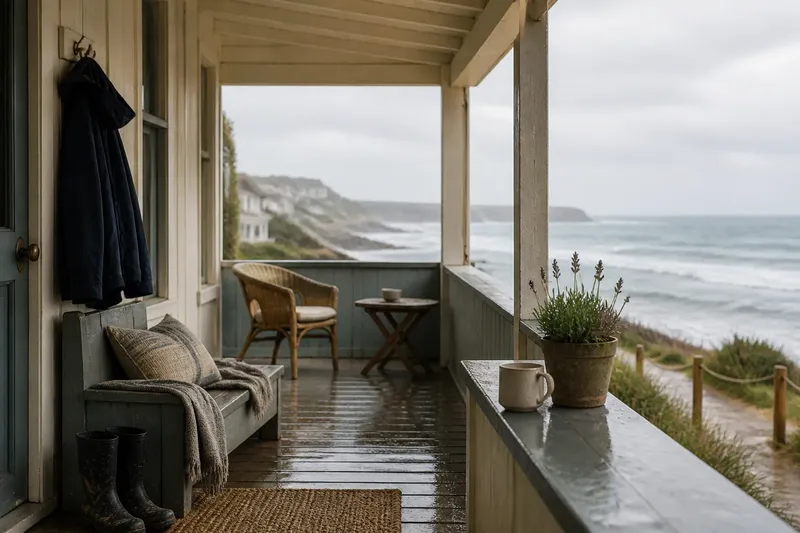
On a windy morning, a chair on the seaside veranda may sit tucked behind a wall, while a mug cools on the sill and rain skims across the boards. By afternoon, the same space can become a place to watch the tide or talk with a neighbour. The changing idea of the seaside veranda lies in that daily shift: it is neither fully indoors nor simply outside, but a threshold shaped by shelter, view and use.
To understand a veranda in a coastal home, look beyond its outline. Notice where people pause, which openings they use, and what weather the structure softens. Its purpose can change with the season, the household and even the direction of the wind. A veranda earns its place by making a particular relationship with outdoors comfortable and legible.
Between room and shore
A veranda gives domestic life a buffer. A roof takes the edge off sun or drizzle; posts, screens or a low wall define a boundary without closing the view. From inside, it can extend the sense of a room. From outside, it offers a sheltered place to arrive, remove wet shoes or wait before going in.
That middle position is more than a matter of comfort. The threshold lets a household decide how much of the shore to invite in. A screen may temper wind and flying grit while keeping the sound of surf. An open side may make the veranda feel exposed, but allow air to move through. Like a coat left by the door, the veranda is useful because it responds to conditions without becoming the house itself.
Its boundaries also shape social life. A seat facing the lane can welcome a passing greeting; one turned towards the water makes a quieter place for watching. A veranda with room to sit and pass can serve both purposes. When it is narrow or heavily exposed, a brief pause may suit it better than a long gathering.
Shelter in daily use
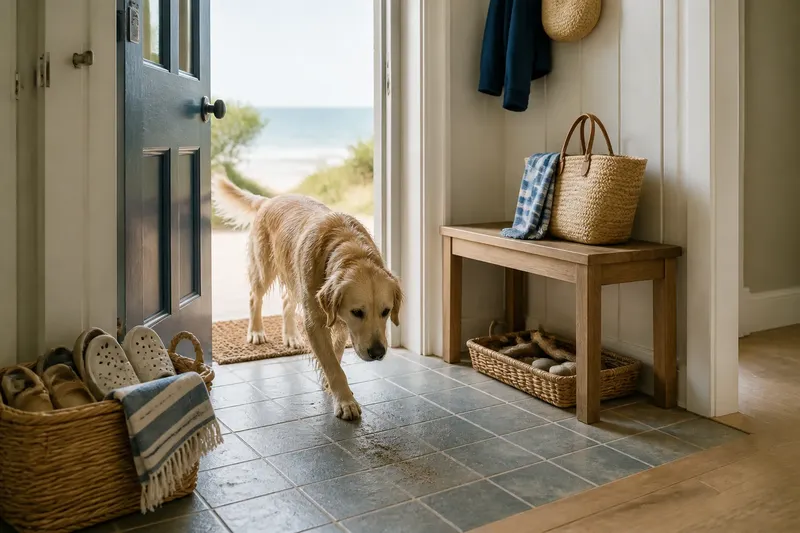
In a coastal setting, shelter is not simply a roof overhead. The angle of rain, the path of the wind and the low glare of a bright sky all matter. Eaves may protect the threshold, while a side wall blocks a gust that would otherwise make a chair unusable. A veranda can therefore be a practical extension of household routines: a place to shake out a damp coat, leave sandy footwear, or let a dog settle before entering the living room.
Those uses should be read from the house itself. Look for the entrance people naturally choose, the side that stays drier, and the route between veranda, kitchen and garden. A bench near the door may support a quick change of shoes. A table farther from the entrance may suit meals or quiet work. The arrangement works best when it follows the existing flow rather than forcing everyone to cross the space in the same way.
Imagine a household whose veranda faces a sea breeze and receives slanting rain at the door. They could move the everyday bench to the wall that offers more cover, keep a washable mat by the entrance, and reserve the more exposed end for a folding chair used in calm weather. The observable result would be a clearer dry route indoors and a seat that is easier to use when conditions allow. The veranda would still be open to the shore; its everyday role would simply reflect the weather it receives.
An outlook with purpose
A veranda often frames a view rather than presenting the whole coast at once. A post, railing or roof edge can give the eye a resting point, much as a picture frame makes a scene easier to take in. This matters in a house where the shoreline changes with cloud, tide and light. The veranda offers a place to notice those changes while remaining connected to the rhythms of the home.
Where a seat faces matters. A chair aimed towards the horizon encourages lingering, but may put its occupant in direct sun or wind. Turning it slightly towards the side can preserve a view while making conversation easier. If the outlook is across a path or harbour, a small seat near the boundary may make watching activity part of ordinary domestic life, without turning the veranda into a viewing platform alone.
Light changes the role again. Morning light may make a sheltered corner suitable for breakfast, while late glare can send people towards the shaded side. Rather than treating one arrangement as permanent, notice when the veranda feels inviting and what causes people to leave it. A movable chair or light table can respond to the day without obscuring a route or taking over the space.
Outdoor life at home
The veranda’s connection to outdoor life can be quiet and ordinary. It may hold a pot of herbs, a place to mend a net, or a surface for cleaning beach finds before they enter the house. These activities differ from furnishing an outdoor room for display. They make the threshold useful in ways that suit the household and the local setting.
Materials contribute to that sense of belonging. Timber boards, painted posts, stone steps or woven seating can connect the veranda to the house and its surroundings. Salt air and damp conditions also make upkeep part of its use. Choose finishes and furnishings suited to the exposure, and follow the product instructions where care or compatibility is unclear. Keep objects that cannot tolerate weather inside, rather than expecting the veranda to protect them in every condition.
Plants can soften the boundary, but their placement should not block views, airflow or the way people move through the space. A hardy container near a sheltered corner may be more useful than a row of pots along a windy edge. The point is not to make the veranda resemble a garden; it is to let outdoor life meet the home at a scale that remains manageable.
Reading the veranda?
How is a veranda different from a porch?
Usage varies by place and building tradition, so the names can overlap. A veranda commonly describes a roofed, open-sided space extending along part of a house, while “porch” often refers to a smaller entrance shelter.
Should a seaside veranda be enclosed?
That depends on the weather it faces and the way the household wants to use it. Screens can soften wind and keep out some debris, while open sides preserve a stronger connection to air and view; local rules and building guidance may also apply.
What furniture suits an exposed veranda?
Choose pieces that are easy to move or store and made for the conditions they will face. A simple chair and small table may serve better than bulky furnishings that narrow the passage or need constant protection.
How can a veranda stay useful in wet weather?
Use the more sheltered area for arrival and brief household tasks, and keep a clear route back inside. A suitable mat and a place for damp outerwear can help contain wetness without turning the veranda into a storage area.
A changing household threshold
The veranda’s role can shift across a week without any redesign. On a mild day it may host a long meal; in unsettled weather it may function chiefly as a covered entrance. On a quiet evening, it may offer a seat from which to watch the last light. These are not competing definitions. They are different ways the same threshold can serve the house.
To see which role matters most, pay attention to what household members already do there. If they stop to greet people, keep that approach open. If they use it to watch the water, preserve a comfortable place to sit. If wet shoes and coats regularly gather at the door, give those tasks an orderly corner. Adjust one thing at a time, then notice whether movement and use feel more natural.
The changing idea of the seaside veranda is therefore practical as well as architectural. It can shelter a threshold, offer an outlook and make room for outdoor habits, but it need not perform all three equally at every moment. Let the direction of weather, the quality of light and the household’s daily routes guide its arrangement. A veranda that can change with those conditions remains connected to the coast without asking the rest of the home to live outdoors.