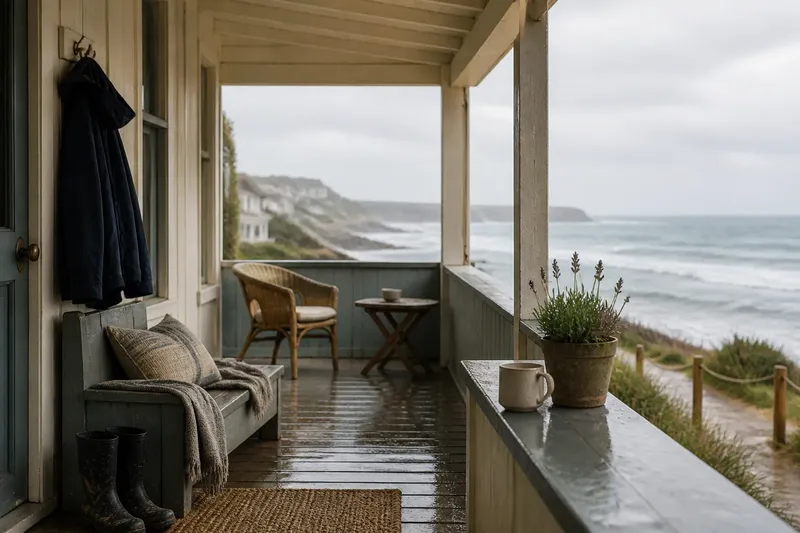
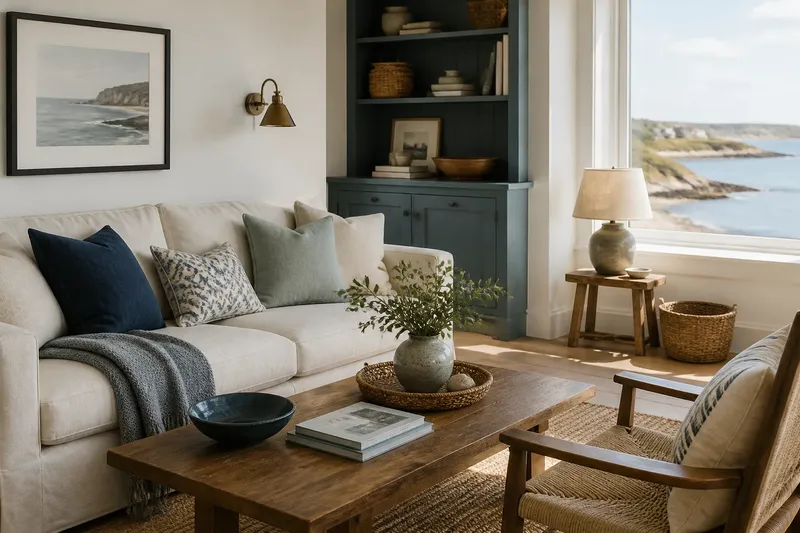
Paint or Tile for a Coastal Entryway?
Paint or tile for a coastal entryway? Compare appearance, underfoot feel and everyday cleaning to choose a finish that suits your household.
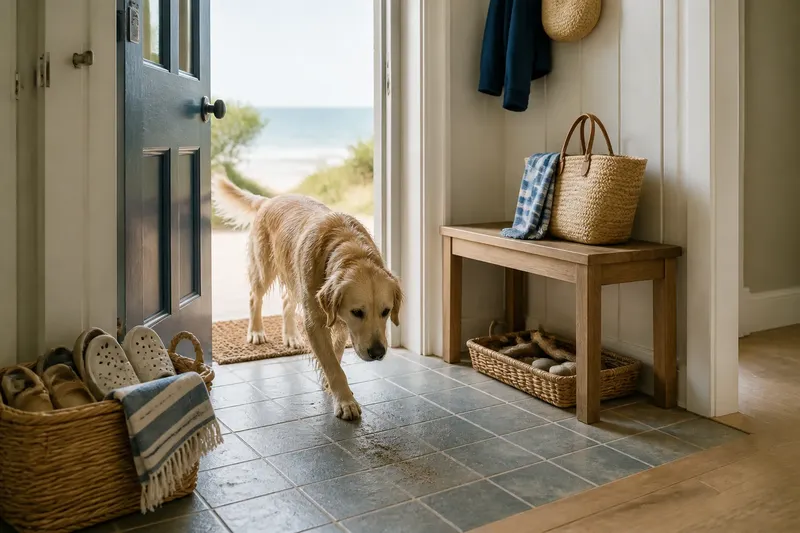
A damp dog noses past a basket of beach shoes, leaving grit on the entry floor and a faint mark beside the door. Choosing paint or tile for a coastal entryway is less about finding one perfect finish than deciding which signs of daily use you want to see, feel and clean.
Both surfaces can work in a shoreline home. Their differences show up in the way they meet the rest of the room, respond to bare feet and collect the small messes that arrive with wet coats, sandy hems and open doors.
Start with the threshold
Look at the entryway as a transition, not an isolated patch of floor or wall. Note where people step off the porch, where shoes come off and whether the entry opens directly into a kitchen or sitting room. Those habits help determine whether the finish should draw attention, blend into a larger space or make cleaning easier to manage.
Paint generally creates a continuous colour field. On walls, it can carry the same tone around a narrow hall and into adjoining rooms, making changes in layout less visually abrupt. Painted floorboards can do something similar, though the surface and existing floor condition matter. Paint highlights the shape of the boards and can make scuffs or uneven patches part of the room’s visible character.
Tile reads more distinctly. A tiled landing can mark the place where outdoor shoes belong, while a pattern or border can make a small threshold feel deliberate. That visual boundary may be useful in an open-plan home, but it can also make the entry seem separate from the rooms beyond it.
Appearance and continuity
For visual continuity, compare the entry finish with the material that follows it. A painted floor meeting timber boards creates a clear change in texture even if the colours are close. Tile beside timber makes that transition more obvious, so the edge, grout colour and direction of the tile deserve attention.
Colour affects how each option feels in a modest space. A quiet, close-toned tile can sit back, while a small-scale pattern can give the doorway a point of focus. Paint can soften the transition into a hall, especially when its colour echoes a wall or trim nearby. Neither finish has to be pale: a muted blue, warm grey or earthy green may sit comfortably with weathered wood, woven baskets and the changing light near the coast.
Consider what the finish will frame. A tiled floor may make a plain bench or coat hooks feel more composed; a broad painted surface can leave room for a patterned runner or a collection of everyday objects. Think of the threshold like a picture frame: its job is partly to define the scene, not to compete with everything inside it.
Underfoot character
Tile often feels firm and cool under bare feet. That can be welcome after coming in from warm sand, but less inviting on a chilly, damp morning. Smaller tiles bring more grout lines underfoot; larger pieces create a simpler visual field, though the room’s proportions and layout affect what suits it.
Painted boards tend to feel less hard in character and preserve the sense of a traditional timber floor. Their surface can show the grain and joints rather than covering them. The finish may feel slick when wet depending on the product and surface, so do not assume that appearance alone tells you how it will behave. Check the product guidance for the intended floor use and follow the maker’s instructions.
Also notice how the entry is used at different times. A household that moves through in socks may care more about warmth and texture; one that leaves shoes by the door may prioritise a clearly defined landing. A washable mat can change either surface’s day-to-day feel without requiring the finish itself to carry every task.
Routine cleaning
For both finishes, loose grit is easier to remove before it is walked around. A small brush, a doormat and a place to leave wet footwear can reduce the amount that reaches the rest of the house. The useful question is not which surface never needs attention, but which routine you are more likely to keep up.
Tile usually allows straightforward wiping of sandy footprints and muddy marks. Grout can collect dirt and may need separate attention, particularly where the entry stays damp. A simple tile surface with grout in a practical colour can make routine care less fussy than a finely patterned layout with many joints.
Painted surfaces are easy to spot-clean when the coating is suited to the job, but repeated rubbing can leave a change in sheen or wear through a vulnerable finish. Keep the paint name and finish details for future touch-ups. For painted boards, a mat can catch abrasive grit before it is dragged across the surface.
Say you have a narrow entry used by children coming in from a pebble beach, with a timber hall beyond it. If you want the threshold to read as a separate landing and expect to wipe up wet marks often, a restrained tile may suit that routine. If you want the hall to feel like one continuous space and are content to sweep grit promptly, a suitable painted floor could be the closer fit. The useful result is a choice tied to actual habits, not a claim that one material handles every coastal home better.
Questions at the threshold?
Does tile always suit a wet entry?
Tile can be convenient to wipe, but its underfoot feel and the condition of its grout still matter. Check the surface details and maker’s guidance for the intended use rather than judging by the word “tile” alone.
Can painted boards work by the door?
They can, if the existing floor and chosen coating are appropriate for that use. A mat, regular grit removal and prompt attention to wet marks help keep the entry routine manageable.
Which finish makes a small hall feel larger?
A continuous paint colour can make the hall feel less interrupted, while a quiet tile can define the entry without demanding much attention. The finish that works best depends on how strongly you want the threshold to stand apart from the next room.
Should the entry match the adjoining room?
It need not match, but a considered transition helps the rooms feel related. Repeating a nearby colour or choosing a tile tone that sits comfortably beside the next floor can connect them without making them identical.
Choose for daily use
Before deciding, stand in the doorway and picture the ordinary arrival: shoes, damp hems, a bag set down and someone passing through. Then compare the visible transition, the feel underfoot and the cleaning you will actually do. Paint or tile for a coastal entryway becomes a simpler decision when each finish is judged against that small, recurring scene.
Finally, check the surface condition and product instructions before choosing a coating or tile. Where the right option depends on the material already in place, the manufacturer’s directions or local requirements, ask a qualified tradesperson. A finish that suits the threshold should make coming home feel easy, not add a new chore to the door.